A couple of clarifications seem to be in order regarding a post on my blog and the name of my blog itself. There I was blissfully posting away not recognizing that certain individuals reading my blog would not understand some of the allusions I have been making so wantonly. So, lest you think me a complete snob, allow me to first clarify the title of the said post, so unpretentiously titled "When I Had a Fulbright in Warszawa." This term, as you shall see, really belongs in quotes. So, I went ahead and made that essential typographical correction, which automatically turns anyone who uses it into an instant post-modernist, to the original post.
The phrase originates from an overheard conversation a friend of mine encountered at an internet kawiarnia:: cafe off of Krakowskie Przedmiescie near Warsaw's Old Town. Really he was the only one of us so-called "Fulbrighters" to actually hear this bombastic exchange put on so effortlessly by an ex-pat (of course!). But it did not matter that all of us were not able to witness this man make a complete ass out of himself, because his being witnessed by one of us was equivalent to his being witnessed by us all. In fact, his pompousness would affect all of us Varsovian Fulbrighters right down to the core of our very beings for the rest of our stay in Poland and beyond. As my friend so eloquently put it, "that dork kept talking and saying, 'When I was living in ...' " and each time he would make such a statement he would punctuate it by pronouncing the city or country with an exaggerated accent. (Sadly, my friend can no longer remember where this dork had traveled or lived -- but it was quite possibly somewhere in South America). That said/witnessed, the phrase "When I had a Fulbright in Warszawa" became a perfect moniker for our lived realities in good old Polska:: Poland, our little inside joke. A joke, I neglected to fill you in on, thereby embodying the very essence of the dork himself.
Moving right along, clarification # 2 is patiently waiting its turn to be read and understood. So long overdue is this clarification; it irks me that I didn't make it sooner. You may have been keeping tabs on my blog, and you may even have enjoyed it just a bit. Chances are, however, that if you lack familiarity with any sort of Slavic language, that there has been at least one point in your reading the title of my blog during which you strained your vocal chords attempting to pronounce it. All the while thinking, "what the hell does that mean, anyway?!?!?," while simultaneously hacking up tiny specks of spittle onto your computer screen attempting to sound out the syllables. Only to have to, then, wipe the screen squeaky clean before continuing to devour the words that I so narcissisticly offer up to you on a fairly consistent basis. Well, this too, I have to partially credit to my dear friend in the aforementioned clarification #1. You see, it is he who baptized me in the name of chrzan (hrzan):: horseradish as Chrzanka (hrzanka), my Polish punk name. It was, however, my idea to combine my Polish punk pseudonym, with the equally Polish greeting of "halo" (think Hello Kitty). Thereby, naming my blog. Ahhhh, finally, mystery solved and clarification achieved.
It's lewd multi-cultural pun fun time, boys & girls
chrzan beaver fever!
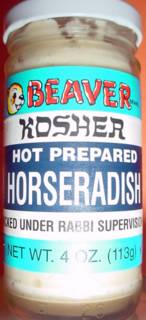
What on earth does a beaver have to do with chrzan:: horseradish?!?!?! I am as stumped as you are.
Making this serendipitous discovery reminded me of a picture I took of a food delivery van in the Czech Republic. Upon spotting the van I was initially shocked at its chosen logo:
hungry for some . . . ?
 See, in Polish "cipa" is downright explicit compared to the connotations "beaver" elicits. Shocked I turned to my multi-Slavic-lingual friend (same friend from above), mouth wide open and said, "Can you BELIEVE that!" He quickly pointed out to my naive Slavic mind that "cipa" (food, if I recall correctly) in Czech is not the same as "cipa" (think kitty with a "p") in Polish.
However, we all know both are just as rejuvenating, tasty, and satisfying!
This is a segment I will be posting ever so often as a way of resurrecting and exploring the time I spent in Warszawa, Poland (2001-2002). This is something that I have actively avoided doing since my return to the States over 2 years ago. I am starting this project now because I find it a necessary mental exercise -- a way to help me process and digest my feelings about the entire mess and marvel that was Poland.
Warszawa flags
The stories, blurbs, items, pictures and any and all images posted will come from my Fulbright proposal/essay, my own journal entries, the e-mails sent to my family and friends, a variety of found and collected objects as well as pictures that I took. My observations will not be posted in any particular or chronological order because, like all memories and nostalgic recollections, reconstructions about the past do not occur in any orderly fashion. So, I won't force that artificial order on them either.
That said, allow me to begin at the beginning by posting select fragments from my personal essay - - part of the Fulbright application process.
~~~~~~~~~~~~~~~~~~~~~~
I am a Polish-American woman. Or, is it an American-Polish woman? The order of my hyphenated ethnic status may seem trivial to some, but the question of my "Polishness" weaves in and out of my life at a fairly constant pace leading me to ponder its meaning with necessary seriousness. My family emigrated from Poland to the United States in 1979, when I was three years old. As a result, my strongest connections to Poland are sensory. At a very young age, I learned how to unlatch the lock on the prickly green door of our small one bedroom Kosciuszko Street apartment. With my newly acquired skill, I would lead my younger sister on adventures to the cellar that began at the bottom of the stairwell. I remember a musty, stale cellar and the odor of stored coal. My mother worried as we involved ourselves in mischievous fun and youthful escapades. The rest of my memories of Poland are indistinct, colored by my family's retellings of pre-immigrant life and by timeworn black and white photographs.
Besides these memories, it is difficult for me to say what it is that makes me Polish other than I was born in Poland. I attained official United States citizenship in 1994, when I was a freshman at university. My connection to my Polish origins have been limited to family rituals, long distance phone calls to relatives still residing in Poland, attending Saturday Polish school, and taking part in the perfunctory Polish rituals. One of the most memorable traditions that has meaning to me is the Polish Christmas Celebration of Wigilia. This is a time when the bonds of the Polish community are felt through the sharing of stories, food, and oplatek (holy wafer). As newcomers to the United States, we were unaccustomed to and felt alienated from American behavior and society; celebrating Wigilia allowed us to maintain a sense of solidarity and identity in a new environment. Over the years, we have "Americanizied" our approach to Wigilia by tempering some of the religious undertones and dietary guidelines. However, we still celebrate the underlying essence of communal cohesion.
For a long time, my Polish identity was something that I wanted to hide. Poles in Chicago, especially newly arrived immigrants, were frequently taunted as being "stupid Polaks." Growing up it was something I learned to be embarrassed about. I took pride in people's appraisal of me as a Spaniard, Italian, or Grecian because it meant that I did not look and act Polish. However, being a first generation immigrant meant more than superficial adolescent frustrations surrounding peer acceptance. My ethnicity mattered to me but my immigrant status also located me within a specific social stratum of the "upwardly mobile" first generation white immigrant.
The immediacy of establishing stability and security for a family of four in a new country meant that my parents had to quickly gain a foothold in the States. At the time, they did not speak English and their social network was limited to my grandmother, who lived and worked in Chicago. With my grandmother's, help both of my parents found employment as janitors working the swing shift for the past twenty years in Chicago's high-rises. Occasionally, my mother would also take on "domki," that is, she would clean other people's houses on the side for extra income. During the week, exchanges with my parents were limited to a couple of hurried hours between pick up from school and their departure for work. It was only during the weekends when we were able to connect with the reduced frenetic trappings of domestic obligations and differing work schedules.
Our ultimate connections and tensions evolved around negotiating the American public educational system. It was a system that was bewildering to my parents with all of its liberal democratic trappings. After all, what did getting a "free" education mean when it was coupled with mediocre curricula, under funded resources, rundown buildings and concern for physical safety from local gangs? As immigrants, my parents guided and instructed me as best as they could with the linguistic obstacles of speaking a second language and their unawareness of how to participate effectively in my education. It was always the question of "what next" that puzzled us. This became excruciating evident when I approached graduation from high school. The process and politics of registering for standardized tests, researching higher education institutions, and applying for colleges were daunting. Learning to negotiate such an unfamiliar world was difficult, but ultimately proved rewarding.
As I mature and because of my experiences, I yearn to understand and relate to my Polishness on a more intimate level. Moreover, I seek to understand what it means to be a Polish woman in all of its contemporary permutations. After graduating from the Chicago public school system and after completing four years of university study, I have been drawn to the study of ethnicity, immigration, and gender identity across borders and within them. My identification as a first generation Polish immigrant woman growing up in Chicago and attending multiethnic schools has enhanced my own views of social issues. Moreover, it has guided my academic interests.
With hunger in our bellies, money in our pockets, and two hours to spend delighting our gastronomic senses we headed toward Old Krakow, the only Polish restaurant in San Francisco, for some down home cooking. I agree with the rest of the critics that dine at Old Krakow, located in SF's bizarre little West Portal neighborhood. The food is good -some dishes are even great!- but way too expensive for Polish food. So, if you are ever feel like consuming a Polish meal, are in the Bay Area, and don't feel like dishing out the $15.00 for the golabki. Head to the market instead and spend the same amount of many on the ingredients below and make enough golabki to feed a group of about four. Heck, even if you aren't in the Bay Area, go ahead and treat yourself. Actually, you'll probably get more bang for your buck since you'll be buying groceries that most likely will cost less than they would here.
Chrzanka presents a recipe for Polish Stuffed Cabbage (Golabki*)
~~~~~~~~~~~~~~~~~~~~~~~~
*Pronounced - go whoa m b key.
Oh, the fun you can have with golabki! This Slavic delight can be enjoyed in a variety of ways. The stuffing (ground meat, sausage, mushrooms & rice ...) can be as diverse as the sauces in which the golabki bathe. In the culinary sense, the word "golabki" means stuffed cabbage, but in the everyday Polish sense, it can also mean little pigeons. I'm not sure why this is (something about the shape of the rolls perhaps?). I can assure you, though, that it has nothing to do with eating little pigeons.
- 1 lb. ground turkey (Any ground meat will do really. When I was a vegetarian, I used mashed up firm tofu. I betcha that faux vegan "meat" would work nicely, too.)
- 1/2 cup rice (more if you prefer more rice in the stuffing)
- 1-2 cups water
- 1 medium onion, diced
- 1-2 eggs (usually one is enough)
- salt and pepper to taste
- 1-2 tablespoons of flour
- Several dashes of marjoram (or Italian Seasoning)
- 1-2 can tomato paste (depending on how saucy you like it)
- 1 medium head savoy cabbage (savoy cabbage -the wrinkly kind- is best because it is easier to work with and easier/softer to eat, but the regular cabbage is OK too)
Rinse and core the cabbage and remove any bruised leaves. Put the entire cabbage in a large pot of water. Bring to a boil and simmer. I don't know how long you need to do this; I usually do it about 30-45 minutes from the boiling point. The idea is to soften the leaves so that they are easier to handle and eat. While the cabbage is boiling, steam the rice. When the cabbage is done CAREFULLY remove it from the pot. It will be HOT, HOT, HOT!! Rinse it in cold water. When it has cooled a little, remove the leaves one-by-one. As you get to the center, the leaves will get smaller and you won't be able to use them for golabki. You can either throw them away or save them for another recipe. You may want to devein the cabbage leaves by slicing off a portion of the main artery of the leaf.
Put ground meat, steamed rice, onions, egg(s), marjoram, salt and pepper in a large mixing bowl. Make sure the rice has cooled sufficiently before you start mixing. Mix the ingredients well.
Fill each cabbage leaf toward the bottom of the leaf with the stuffing mixture. I think a nice heaping tablespoon is usually enough, but that really depends on the size of your cabbage leaves and your appetite. Fold leaf to enclose the mixture. Do this by folding in the two sides of the leaf toward the center and rolling it up from the bottom up. Pack the golabki tightly side-by-side in a baking dish and pour a mixture of salt water over them. Bake uncovered in 350 degree oven until the leaves start to turn golden.
It's time to sauce it up! Golabki can be served sans sauce but they are usually served dressed up. Most often golabki are served in a tomato sauce but they can also be served in a variety of other sauces (e.g. cream sauce or mushroom sauce). It is your choice and I encourage you to experiment. Since I usually make my golabki with tomato sauce that is the recipe I will give you here.
Once the golabki turn golden is when you'll want to add a mixture of tomato paste, flour, water and seasonings (mix these -to your taste- before adding) to the baking dish. Continue to bake the golabki - this time covered- until the sauce thickens. You may want to make an extra batch of the sauce on the side, since sometimes the golabki absorb a good deal of the sauce. Smacznego!


